


The documentation and revitalization of endangered languages plays a vital role in cultural preservation, enhancement of community identity, and promotion of global linguistic diversity. Apart from that, this seminar can increase knowledge and serve as a medium for students and lecturers to channel new ideas regarding language documentation and can also strengthen knowledge and experience by pouring it into writings that will be published in the proceedings.


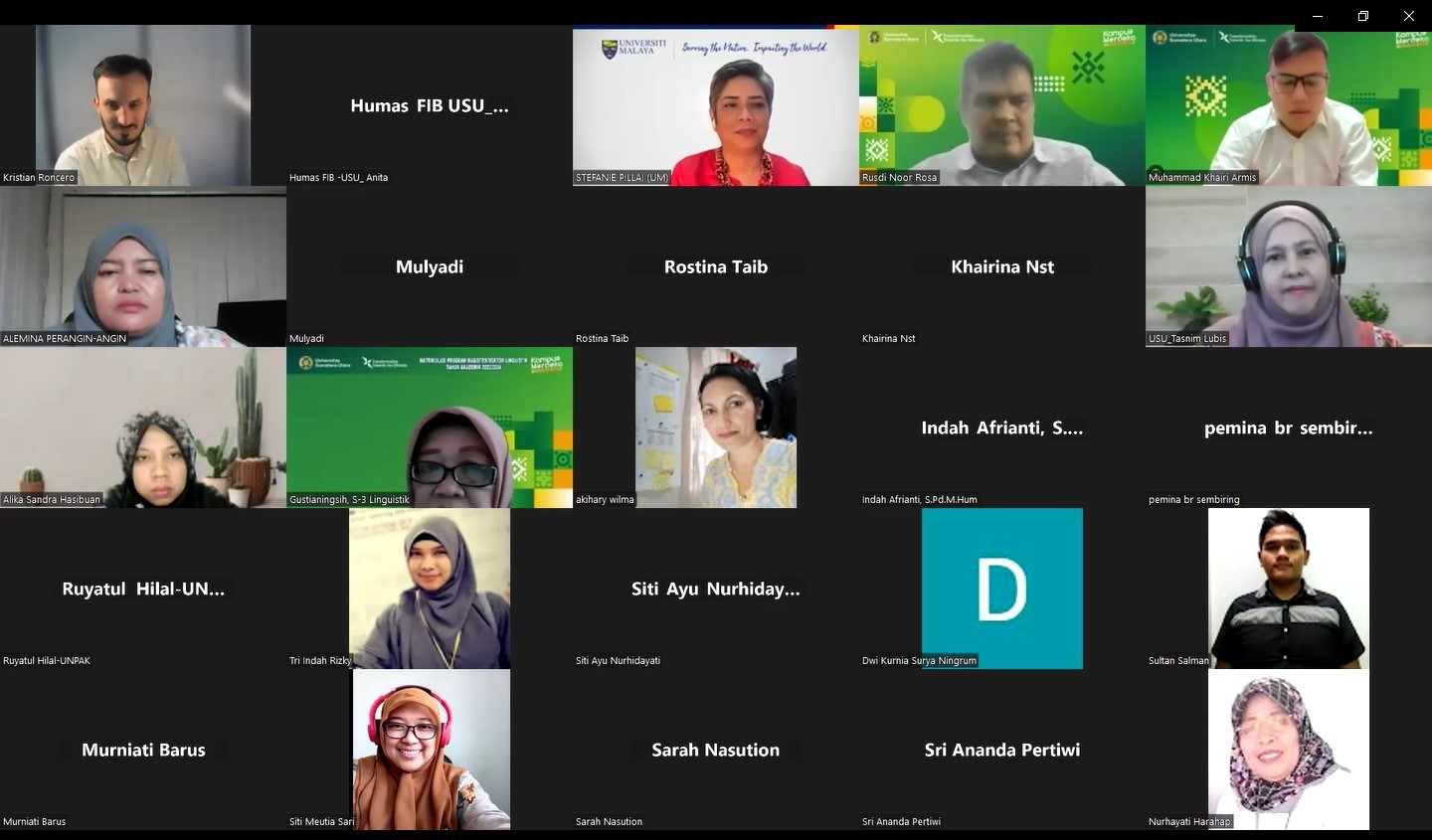
FIB USU PR - Wednesday, June 12th 2024, Master Study Program of Linguistics, Faculty of Cultural Sciences (FIB) Universitas Sumatera Utara (USU) have implemented The 4th Internasional Virtual Seminar on Endangered Language and Linguistics (IVSoELL) 2024 by Theme : “Language Documentation and Language Revitalization” with the Speaker of this activity by Dr. Kristian Roncero (Germany), Prof. Dr. Stefanie Pillai (Malaysia), Dr. Rusdi Noor Rosa (Indonesia) and moderator Dr. Tasnim, M.Hum. and also attended by Prof. Dr. Dra. T. Thyrhaya Zein M.A. (Dean of Faculty of Cultural Sciences, Universitas Sumatera Utara), Prof. Dr. Mulyadi M.Hum. (Head of Postgraduate Program of Linguistics, Universitas Sumatera Utara) Lecturers and Students Master Study Program of Linguistics, Faculty of Cultural Sciences Universitas Sumatera Utara Via Zoom Meetings.
.jpg)
Head of Postgraduate Program of Linguistics, Universitas Sumatera Utara Prof. Dr. Mulyadi M.Hum. in his speech he said that it was improving the quality of students' knowledge and skills in conducting research on endangered language documentation. IVSoELL seminar activities, both before the event and after the event, in order to evaluate these activities. To improve the quality of knowledge and skills of students, lecturers and other seminar participants in conducting research on endangered language documentation. FIB USU Linguistics Study Program has invited Language Research Experts from three countries, namely Dr. Kristian Roncero (Ludwig Maximillians University), Prof. Dr. Stefanie Pillai (University Malaya, Malaysia), Dr. Rusdi Noor Rosa Indonesia (University of North Sumatra). This activity was carried out to improve the quality of knowledge and skills of students, lecturers and other seminar participants in conducting research on language documentation and language revitalization. The seminar was attended by students and lecturers from various universities in Indonesia and abroad.
There are many benefits that can be taken from this IVSoELL seminar, such as regarding the benefits of documentation and the revitalization of endangered languages
1.Cultural Heritage Preservation: Documentation of endangered languages functions as an effort to preserve valuable cultural heritage. Language is the primary means of transferring knowledge, traditions and history of a community. By documenting language, we ensure that this knowledge is not lost.
2.Linguistic Research Resources: Language documentation provides rich data for linguistic research. It helps linguists understand the structure, development, and variations of languages around the world. It can also provide insight into the evolution of human language.
3. Strengthening Community Identity: Language documentation can strengthen the identity and pride of the community that uses it. Language is an integral part of a group's identity, and documenting it shows respect and recognition of their cultural values.
4. Education and Learning: Comprehensive language documents can be used as educational materials. This allows the younger generation to learn and master their mother tongue, even though it is no longer widely used in everyday life.
5. Use of Technology for Preservation: In the digital era, documentation of endangered languages can be facilitated with modern technology, such as audio recording, video and digital platforms. This makes access and distribution of language data easier and wider.
Benefits of Revitalizing Endangered Languages
1.Strengthening Community Identity and Pride: Language revitalization helps revive community identity and pride. When local languages are revived, community members feel a stronger attachment to their cultural heritage.
2.Improving the Language Skills of the Younger Generation: Language revitalization gives the young generation the opportunity to learn and use their mother tongue. This is important to maintain the continuity of language and cultural traditions from one generation to the next.
3.Global Linguistic Diversity: By reviving endangered languages, we maintain the world's linguistic diversity. This diversity is important for linguistic and anthropological studies, and enriches global culture.
4. Supports social and psychological well-being: Language has an important role in the social and psychological well-being of individuals. By reviving endangered languages, communities can feel more empowered and emotionally connected to their heritage.
5. Promotion of Multicultural Education: Language revitalization promotes multicultural education and cross-cultural understanding. It teaches tolerance and respect for cultural diversity, which is very important in today's global society.
The documentation and revitalization of endangered languages plays a vital role in cultural preservation, enhancement of community identity, and promotion of global linguistic diversity. Apart from that, this seminar can increase knowledge and serve as a medium for students and lecturers to channel new ideas regarding language documentation and can also strengthen knowledge and experience by pouring it into writings that will be published in the proceedings.
Dean of Faculty of Cultural Sciences, Universitas Sumatera Utara Prof. Dr. Dra. T. Thyrhaya Zein M.A. in her speech said that the