home icon
search icon
menu icon

Historical Science

Undergraduate Program (S-1)

The Undergraduate Program in Historical Science of Universitas Sumatera Utara (USU) was established in 1968. Since then, the program has produced many outstanding students and influential historians throughout Indonesia. This study program's main focus is the study of past events in a broad context, encompassing geography, health, culture, economics, politics, arts, religion, and the military. Supported by lecturers who are experts and certified in the field of history and the use of an integrated curriculum, we are committed to providing an interactive education and learning experience to our students.

icon
Year Established 1968
icon
Professor xxx
icon
Scientific Article xxx
icon
Students 306
icon
Staff xxx
icon
Alumni 1500
icon
Citation xxx
Dra. Lila Pelita Hati M.Si.

With great pleasure, I am pleased to welcome you to the Undergraduate Program in Historical Science at the Faculty of Cultural Science, Universitas Sumatera Utara.

Welcome and visit the webpage of the Universitas Sumatera Utara Faculty of Cultural Science Undergraduate Program in Historical Science. This webpage serves as a communication media between the study program and various individuals related to the USU Faculty of Cultural Science Undergraduate Program in Historical Science. Along with the official social media channels of the study program, this webpage provides information about the USU Faculty of Cultural Science Undergraduate Program in Historical Science. In our efforts to achieve the study program's vision, mission, and goals, we have strategic plans that continuously improve the quality of the Three Pillars of Higher Education (Tri Dharma Perguruan Tinggi): education, research, and community service. The development of the academic world and the world of work demands that the program adapts to the challenges of Industry 4.0. Moreover, the support from stakeholders is crucial for the future development of the study program. Therefore, the presence of this webpage as a means of communication for lecturers, students, alumni, and stakeholders is expected to foster collaboration and build strong relationships. Finally, it is our hope that this webpage will be beneficial to the broader public in various ways. Salam sejarah.

Dra. Lila Pelita Hati M.Si.
Head of Undergraduate Program In Historical Science
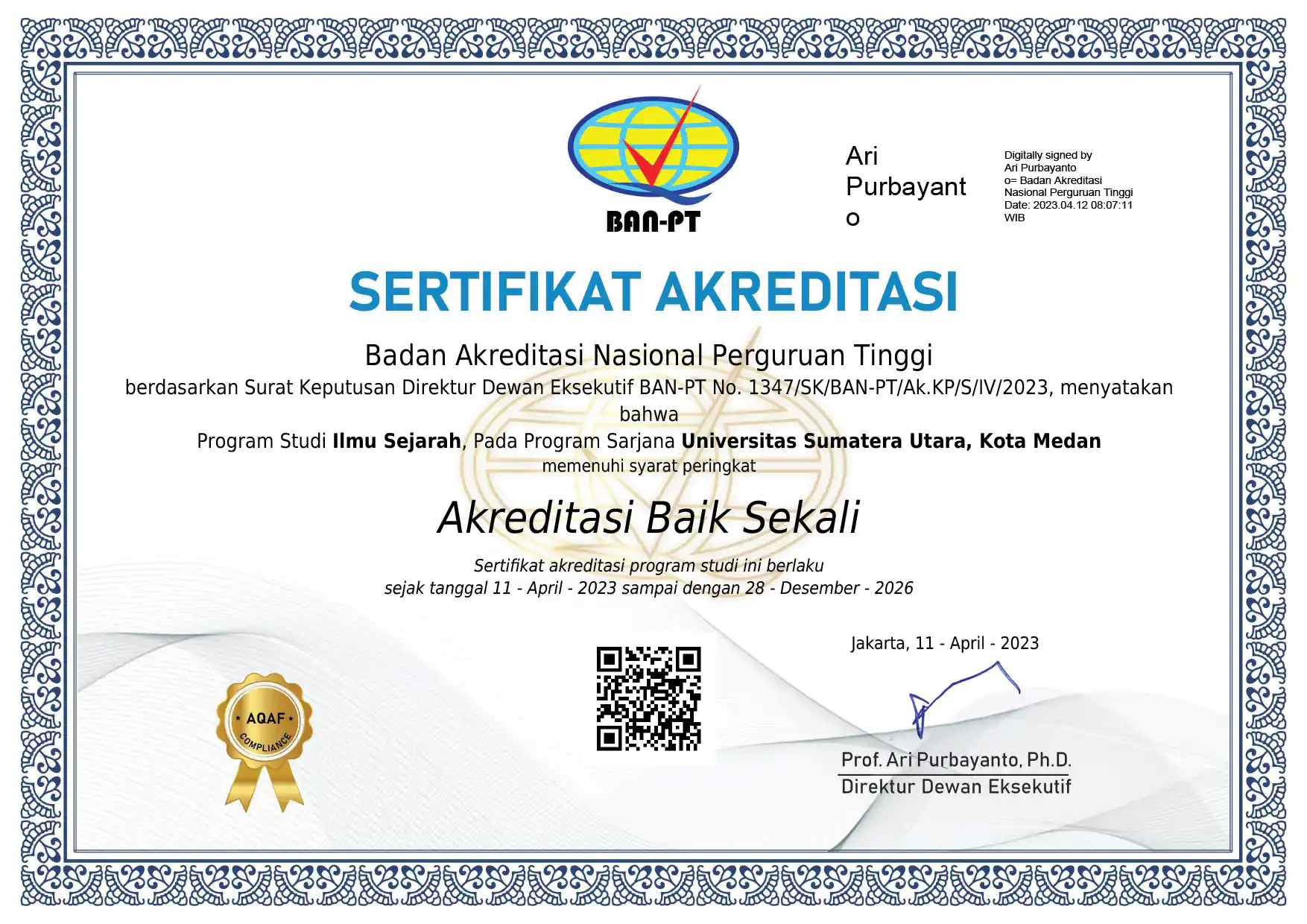
Undergraduate Program In Historical Science Accredited Very Good No. 1347/SK/BAN-PT/Ak.KP/S/IV/2023
Lab Fasilkom-TI

Curriculum Undergraduate Program in Historical Science

You will learn things such as:

  • Regional History Research
  • Indonesian History Research
  • Local History Research
Curriculum
ornament

Graduate Profile

The following is a list of graduate profiles found in Undergraduate Program in Historical Science

Cultural and Historical Educator

Graduates can take on extension roles in museums, cultural institutions, or non-profit organizations. With their historical expertise, graduates can convey in-depth information about cultural heritage and history to the general public. As extension workers, they can design educational programs, cultural tours, and other activities to promote understanding and appreciation of historical and cultural values. Through these initiatives, graduates can play an essential role in preserving and disseminating historical knowledge, motivating public interest, and building awareness about cultural identity. Strong communication skills can create immersive educational experiences and stimulate public interest in history and cultural wealth.

Cultural and Historical Preservationist

Graduates can work in cultural institutions, museums, or heritage preservation organizations to preserve and save historical objects, archives, and sites. As cultural and historical preservationists, they play an essential role in maintaining the authenticity and sustainability of cultural heritage. With in-depth knowledge of the historical context, graduates can design preservation strategies, manage collections, and engage in restoration projects to ensure cultural heritage is passed on integrally to future generations. Through their dedication to preserving history, graduates can contribute to our collective understanding of the past, encourage appreciation of cultural diversity, and help maintain the roots of societal identity.

Curator and Guide

As curators, they may plan and manage exhibitions, curate collections, and conduct research to understand the historical context of art objects or artifacts. As guides, they will interact directly with visitors, providing deep insights into history and culture and facilitating a better understanding of the collections or sites they manage. With historical knowledge and strong communication skills, graduates can bring history to life, provide cultural context, and enhance the visitor experience. In this role, they safeguard cultural heritage and help open doors to the general public's knowledge and interest in history through hands-on experiences that educate and inspire.

Entrepreneur

With in-depth knowledge of history, graduates can establish companies or creative ventures related to the history tourism sector, history book publishing, or history consultancy services. As entrepreneurs, they can design thematic history tours, develop educational products, or provide historical research services for communities or companies. With the courage to take risks and creatively apply historical knowledge, graduates can form and manage their businesses. The leadership and time management skills acquired during their studies can be valuable assets in managing their businesses. Their innovation and entrepreneurial spirit can open up new opportunities, positively impact society, and stimulate public interest in history through unique and competitive business initiatives.

History Observer

As observers of history, graduates can work in the media, research institutions, or government agencies, providing in-depth analysis and perspectives on current historical events. Writing articles and columns or participating in public debates can help society understand the impact of history on contemporary developments. With the analytical and interpretative skills they develop during their studies, graduates can read and detail social trends, conflicts, and changes, bringing historical insights into broader discussions. This position allows graduates to play an active role in shaping the historical narrative of the present, contributing to public understanding, and ensuring that historical perspectives are recognized in the formation of contemporary policy and thought.

Nonprofit Industry

In non-profit organizations, graduates can contribute as program developers, historical researchers, or project coordinators. With in-depth knowledge of history, graduates can assist these organizations in detailing and understanding the historical context relevant to their goals. Their roles may include managing educational projects, designing programs for cultural heritage preservation, or conducting research to support social advocacy. Analytical skills and a deep understanding of historical events can be valuable assets in shaping the policies and missions of non-profit organizations. By contributing to these efforts, graduates help preserve and disseminate historical knowledge and support the humanitarian and community empowerment goals that non-profit organizations focus on.

Teacher

They can be lecturers or teachers in higher education institutions, secondary schools, or training institutions. As teachers, they will transfer their in-depth knowledge of history to the younger generation, guide students in understanding historical concepts, and facilitate discussions on relevant historical events. With strong communication skills, graduates can inspire interest in history, develop analytical skills, and help students understand the contextual impact of past events in today's society. Through this career, graduates can shape critical thinking and a deep understanding of history, contribute to education, and motivate future generations to understand cultural heritage and world history.

Writer

Graduates can develop history books, articles, or editorial content. As writers, they can detail historical events in an engaging and informative way, delivering narratives that can captivate readers. Analyzing and crafting historical stories is an advantage when creating work that can meet the needs of diverse audiences. Graduates can also explore career options as freelance writers or regular contributors to the media, conveying historical insights through columns or articles. In the digital age, they can utilize online platforms to spread historical knowledge to a broader audience. Graduates can play a crucial role in preserving and spreading historical heritage to modern society by becoming writers.

Researcher

With their analytical skills and mastery of research methodologies, graduates can engage in in-depth research projects on specific historical periods. As researchers, they can work in research institutes, universities, or government agencies to collate and analyze historical sources, contribute to the understanding of historical context, and examine aspects of human life from the past. In this role, they can provide significant insights by publishing scholarly articles and books or participating in academic conferences. In addition, graduates can engage in applied research, such as heritage preservation projects or study for the benefit of society. By becoming researchers, they contribute to academic knowledge and play a key role in preserving and enriching the record of human history.

Content Creator

With an in-depth knowledge of history, graduates can create entertaining and educational content for digital platforms. As content creators, they can manage blogs, YouTube channels, or social media to tell historical stories engagingly. The ability to craft narratives, content analysis, and an in-depth understanding of historical periods gives them appeal to audiences seeking weighty information. In addition, graduates can utilize technology and graphic design tools to create compelling visual content. A career as a content creator allows them to share historical knowledge in a more accessible way, expanding their impact and making connections with diverse audiences in the digital age.

Journalist

Graduates can create in-depth and informative news coverage. Journalists can work in print, online, or broadcast media, reporting on historical events, conducting interviews with historical experts, and presenting contextualized and accurate information to the public. With solid writing skills, graduates can craft compelling narratives to bring history alive in the eyes of readers or viewers. In addition, they can contribute to the historical record through their opinion analysis or editorials. A career as a journalist allows graduates to bridge the gap between historical knowledge and the wider public, contributing to a general understanding of historical events and stimulating interest in cultural heritage.

Archivist

Graduates manage, preserve, and access historical documents and archives. As archivists, graduates can work in cultural institutions, national archives, or libraries, maintaining the integrity of history and culture. With the archival management skills acquired during their studies, they can design efficient archiving systems, ensure document security, and facilitate access for researchers and the general public. Through preserving and presenting historical documents, graduates play a vital role in maintaining historical continuity and ensuring that cultural heritage lives on. This career choice also allows them to get involved in research and restoration projects that shape our view of the past. By becoming archivists, graduates are vital in maintaining the integrity and accessibility of historical information for future generations.

Contact Us

Undergraduate Program in Historical Science Universitas Sumatera Utara

Faculty of Cultural Science

Universitas Sumatera Utara

ornament

Alumni Testimonials

-

One of the strengths of the Historical Science Department at FS USU (now the USU Faculty of Cultural Science Undergraduate Program in Historical Science) is the close connection between history courses and local context. The educators always encouraged us to explore, get to know, and understand the sequence of local events, realities, and local social phenomena that impact the development of the North Sumatran society and the students' respective regions. The proximity of the course materials and the encouragement sharpen our sense of being objective and critical in observing and understanding why social realities can change and how different social realities are interconnected. This sense, which needs to be continuously honed, has become a valuable knowledge and asset from the Historical Science Study Program at the USU Faculty of Cultural Science in our professional endeavors to this day.

Nasrul Hamdani

Nasrul Hamdani

2002 - -

-

The USU Undergraduate Program in Historical Science has led numerous alumni to various career paths. The offered historical science courses are comprehensive, meaning that all fields of knowledge are studied, thus opening up students' perspectives to delve into not only conventional history but also contemporary history using sociological analysis. Therefore, every individual studying in historical science is challenged to explore other disciplines, enabling them to compete with other majors. As evidence, many history alumni have served in various institutions. This is because the alumni possess the ability to compete in the world of work.

Edward Silaban

Edward Silaban

2005 - -

-

Being one of the alumni of the Historical Science Department at FIB USU is truly an extraordinary thing. During my studies, I gained a lot of insight and experiences that helped me progress to the next stages of my career. The learning environment is comfortable, the courses offered are interesting, and there’s harmony between the lecturers and students. I truly felt how the USU Faculty of Cultural Science Historical Science Department fully supports and encourages its students to excel in the fields of education, research, and service, both nationally and internationally. I hope that the USU Faculty of Cultural Science Historical Science Department continues to produce high-quality and outstanding graduates.

Ika Azura Margolang

Ika Azura Margolang

2014 - -