


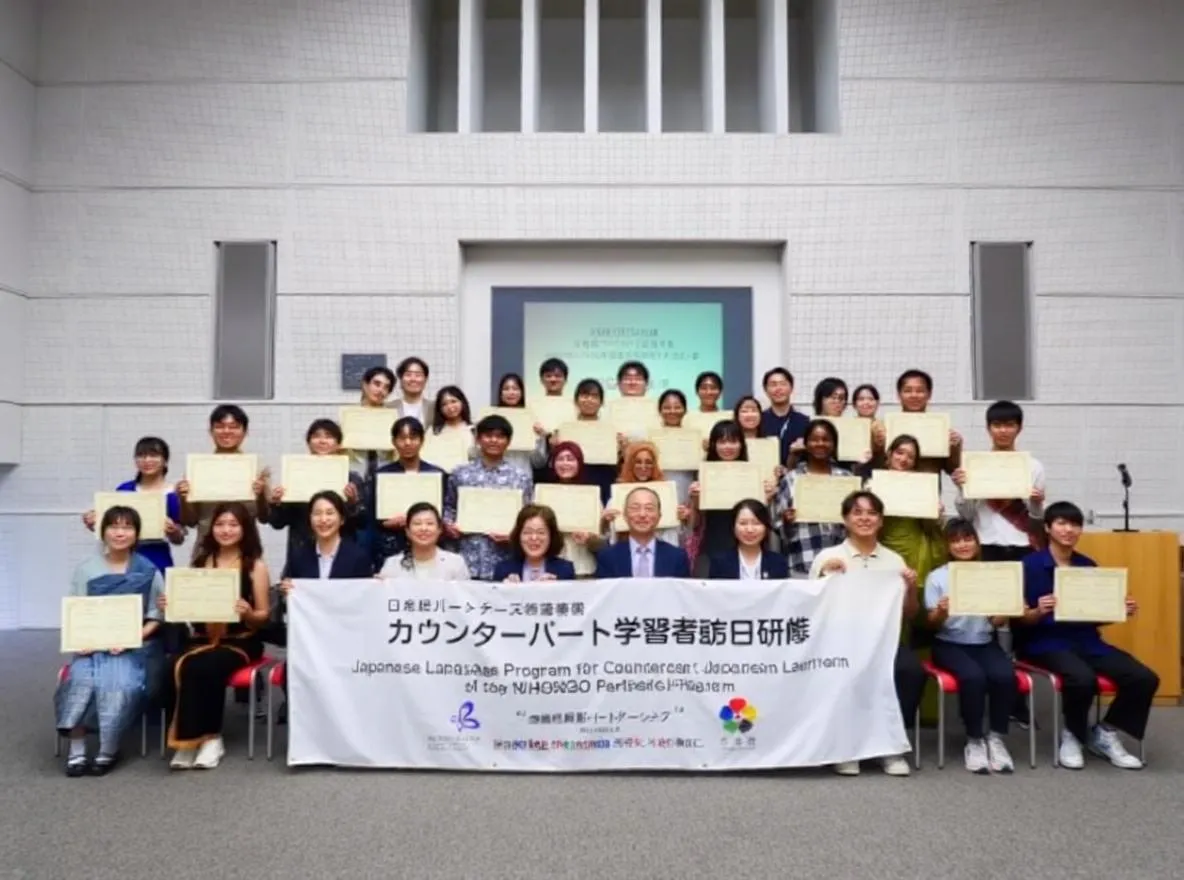
A student of the Undergraduate Program in Japanese Literature of the Faculty of Cultural Sciences, Universitas Sumatera Utara (FIB USU), Hana Nazihah Siregar, participated in the Japanese-Language Program for Counterpart Japanese Learners of the Nihongo Partners (University Students) Spring Program 2026 organized by The Japan Foundation through the Japanese-Language Institute, Kansai, Japan. The international program took place from May 12 to June 24, 2026, at the Japanese-Language Institute, Kansai, Osaka, Japan, and was attended by 27 participants from Indonesia, Vietnam, Malaysia, Singapore, Thailand, Laos, the Philippines, and India.
This program was an intensive training and exchange program for Japanese language-learning university students who serve as counterparts in the Nihongo Partners program. In addition to directly improving Japanese language skills in a native-speaker environment, the activity also invited participants to study global sustainable issues or the Sustainable Development Goals (SDGs) as well as Well-being. Interaction with participants from various countries provided opportunities to broaden cross-cultural perspectives while building international networks.
During the program, participants underwent intensive Japanese language learning every day using Japanese as the language of instruction. The 27 participants were divided into three classes, with each class accompanied by a Japanese language instructor. The learning materials were divided into four main themes, namely 食 (shoku) or food, 観光 (kankou) or tourism, ダイバーシティ (diversity) or diversity, and 私の「テーマ学習」 (Watashi no Teema Gakushuu) or learning based on a theme selected by the participants.
Learning was not only conducted through classroom activities. Participants were involved in group discussions, reflection and mind mapping, Japanese essay writing (sakubun), as well as research projects that included developing questions, collecting data through interviews, and giving presentations. This learning approach provided participants with opportunities to actively use Japanese while developing their ability to collaborate, think critically, and convey ideas.
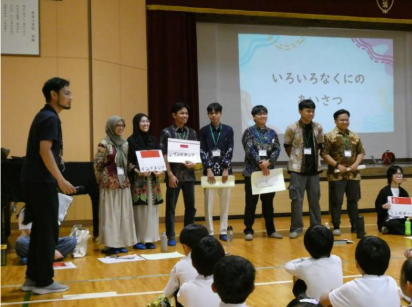
The learning experience was also strengthened through various field activities. On May 21, 2026, participants visited Izumisano-shiritsu Nagasaka Shougakkou. During the activity, participants introduced the cultures of their respective countries to elementary school students, had lunch together, and participated in classroom cleaning activities or o-souji.
On June 4, 2026, participants visited Kokuyo K. Heart Co., Ltd. through the Kokuyo Houmon activity related to the Diversity theme. The visit provided an experience of the implementation of Universal Design, including observations of stationery and furniture designed to be easy to use by people with disabilities as well as left-handed users. Participants also learned about an inclusive work environment and the use of visual communication systems in the factory environment.
In addition, Hana participated in the Home Visit program on June 13, 2026. During the activity, Hana interacted directly with a host family and participated in various daily activities of Japanese society. The activities included cooking and enjoying takoyaki, experiencing the nagashi somen tradition, playing with the host family's children, learning to make origami, and visiting a local temple surrounded by ajisai flower gardens. This experience provided an opportunity to learn more closely about the customs and daily life of Japanese society.
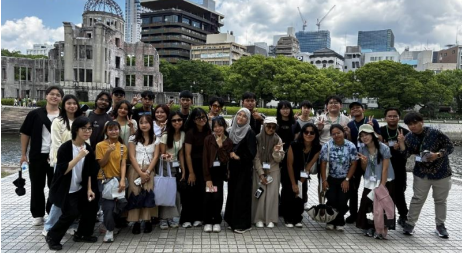
The program also included a study trip to Hiroshima and Hyogo from May 28 to 30, 2026. In Hiroshima, participants took part in the Senbazuru activity by folding paper cranes to be presented at the Children's Peace Monument, visited Miyajima and Itsukushima Shrine, and visited Hiroshima Peace Memorial Park & Museum and the Atomic Bomb Dome. The trip continued to Hyogo to visit Himeji Castle and explore Kobe City. These activities provided experiences related to the history, culture, and tourism of Japan.
As part of the Japanese student exchange activities, participants also took part in Osaka Orienteering. Participants were divided into small groups to independently explore Osaka City, observe the daily lives of local people, and interact with residents to practice the Osaka dialect or Osaka-ben. The observations and experiences were then discussed and presented in class.
Experiences of traditional Japanese culture were also part of the program through the Bunka Taiken activity. Participants could choose from the available cultural activities, and Hana participated in Aikido and Kadou or Ikebana. In the Aikido activity, Hana learned basic movements, balance, and the philosophy of respect in traditional Japanese martial arts. Meanwhile, through Kadou, Hana learned techniques for cutting stems, utilizing space, and arranging traditional Japanese flowers.
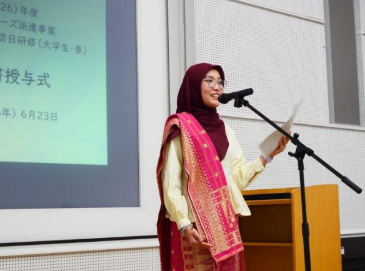
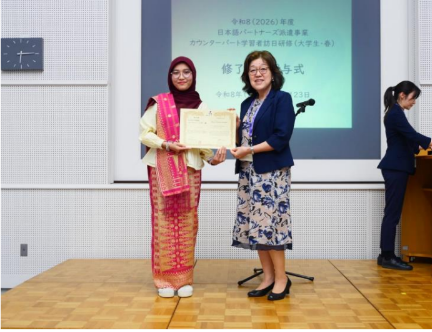
In addition to participating in various learning and cultural activities, Hana Nazihah Siregar also had the opportunity to represent participants from eight countries at the Official Closing Ceremony or Shuuryōshiki. Hana delivered a speech in Japanese containing her experiences during her studies in Japan, expressions of gratitude to the organizers, and impressions of the friendship established among participants from various countries.
Hana's participation in the Japanese-Language Program Spring 2026 provided a learning experience that focused not only on improving Japanese language skills but also on social and cultural understanding, the development of communication and teamwork skills, independence, and cross-cultural interaction. The program also served as a space for university students to build networks with Japanese language learners from various countries in Asia and India.
Through her participation in the international program, Hana Nazihah Siregar represented the Undergraduate Program in Japanese Literature of FIB USU in an international academic and cultural exchange environment. Her direct learning experience in Japan and involvement in various academic and cultural activities are expected to enrich students' perspectives while encouraging the improvement of Japanese language skills and participation in international programs in the future.