


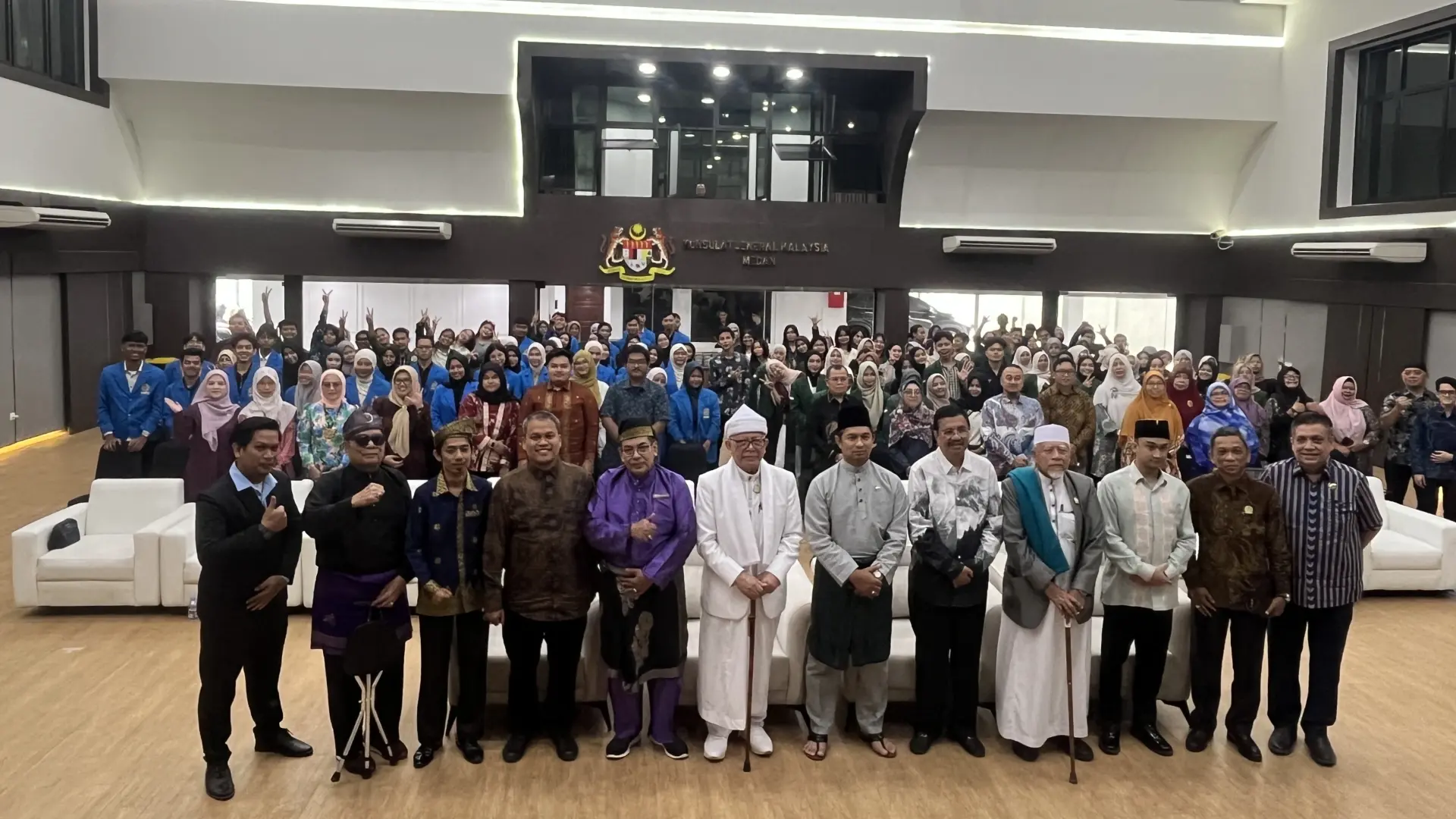
The Malay Literature Undergraduate Study Program at the Faculty of Cultural Sciences (FIB), Universitas Sumatera Utara (USU), attended the "Language and Culture Discourse: Exclusive Screening and Discussion of the Film Puteri Gunung Ledang (Princess of Mount Ledang)," organized by the Consulate General of Malaysia in Medan. The event, hosted by Consul General Shahril Nizam Abdul Malek, took place on Thursday, August 20, 2026.
Through the collaboration with the Consulate General of Malaysia in Medan, the activity addresses SDG 17: Partnerships for the Goals—specifically, cross-sector collaboration. Attendees included Prof. Dr. KH. Amiruddin M.S., M.A., M.B.A., Ph.D.; the Sultan of Deli, Tuanku Mahmud Aria Lamantjiji Perkasa Alam Shah; the 17th Governor of North Sumatra, Dr. Ir. H. Tengku Erry Nuradi, M.Si.; the Vice Dean for Academic, Student, and Alumni Affairs at FIB USU, Dr. Zulfan, M.Hum.; the Vice Dean for Research, Community Service, Cooperation, and Internationalization at FIB USU, Andi Pratama Lubis, M.Hum.; heads of study programs; lecturers and students from the Malay Literature and Indonesian Literature undergraduate programs; as well as representatives from Universitas Muhammadiyah Sumatera Utara (UMSU).
The event opened with remarks from the Consul General of Malaysia, Mr. Shahril Nizam Abdul Malek. Following the opening remarks, the film Puteri Gunung Ledang (Princess of Mount Ledang) was screened. The film was analyzed by two speakers—Prof. Dr. Khairil Ansari, M.Pd. (from the UMSU Center for Malay Cultural Studies) and Arie Azhari Nasution, M.A. (Head of the Malay Literature Undergraduate Study Program at FIB USU)—in a session moderated by Dedy Rahmad Sitinjak, M.Si.
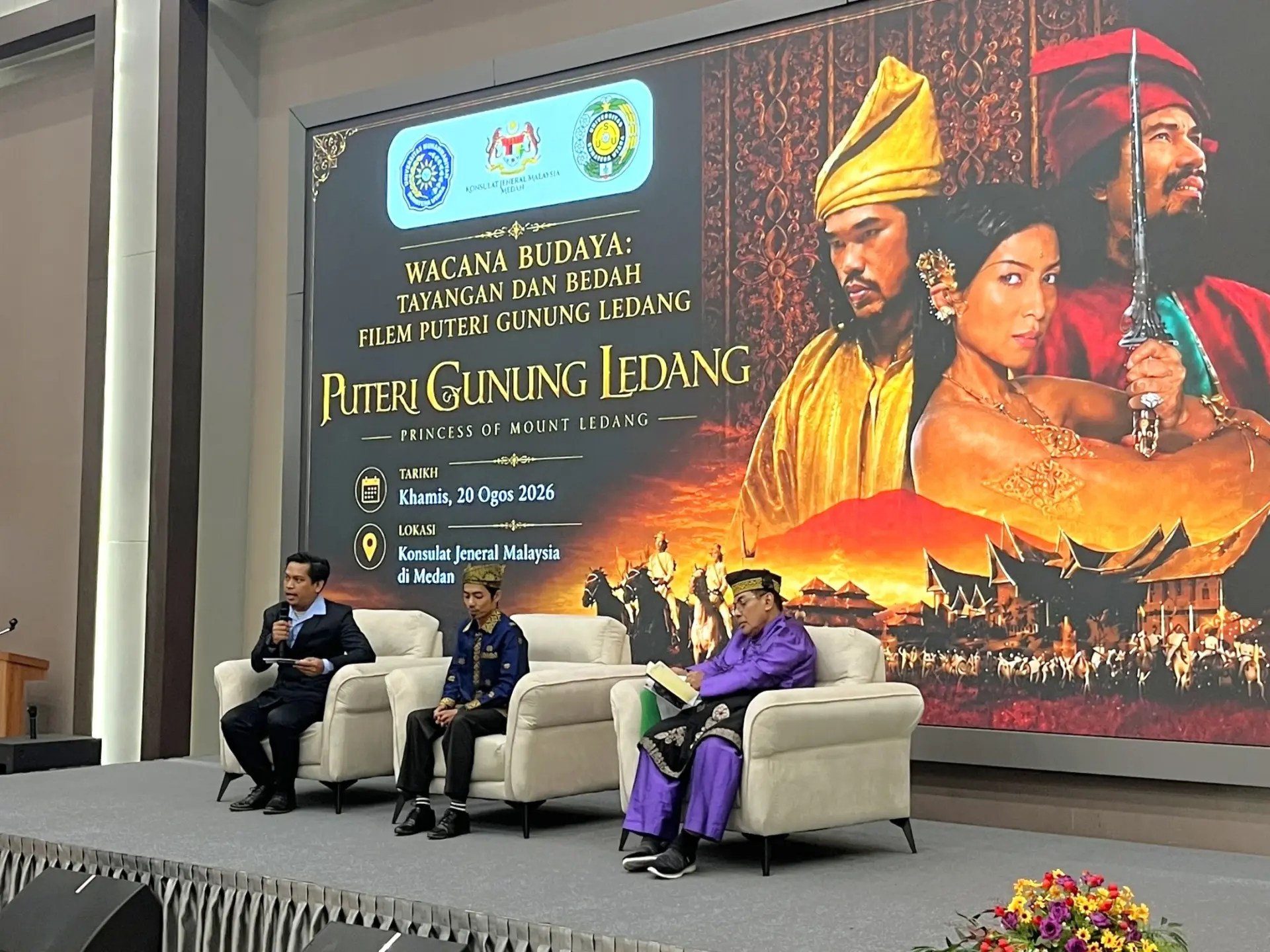
The presentation delivered by the Head of the Malay Literature Undergraduate Program focused on the topic: "Reflecting on the Shared Heritage of the Nusantara (Malay World): Linguistic and Cultural Parity in the Film *Puteri Gunung Ledang*." This material aligns with SDG 4: Quality Education. The speaker discussed the post-colonial framework; the deconstruction of the 1824 border based on historical evidence and reality; the diplomacy of equality between two great civilizations—Majapahit and Malacca; and shared material heritage, including batik, songket, keris, gamelan, the gambus, and silat.
He also explained how the film rebrands pop culture by packaging Malay history with epic-fantasy-style visuals that appeal to the youth; transforming narratives of unilateral cultural claims into a sense of shared pride among the nations of the Nusantara; and dispelling the notion that Malay history is archaic through high-quality, pop-culture-oriented cinematography.
"Colonial treaties divided our territorial boundaries, yet the womb of Malay culture and language binds us together within an equal Malay-Nusantara realm," stated Arie. This sentiment aligns with SDG 16: Peace, Justice, and Strong Institutions — specifically regarding the promotion of harmony in Indonesia.