


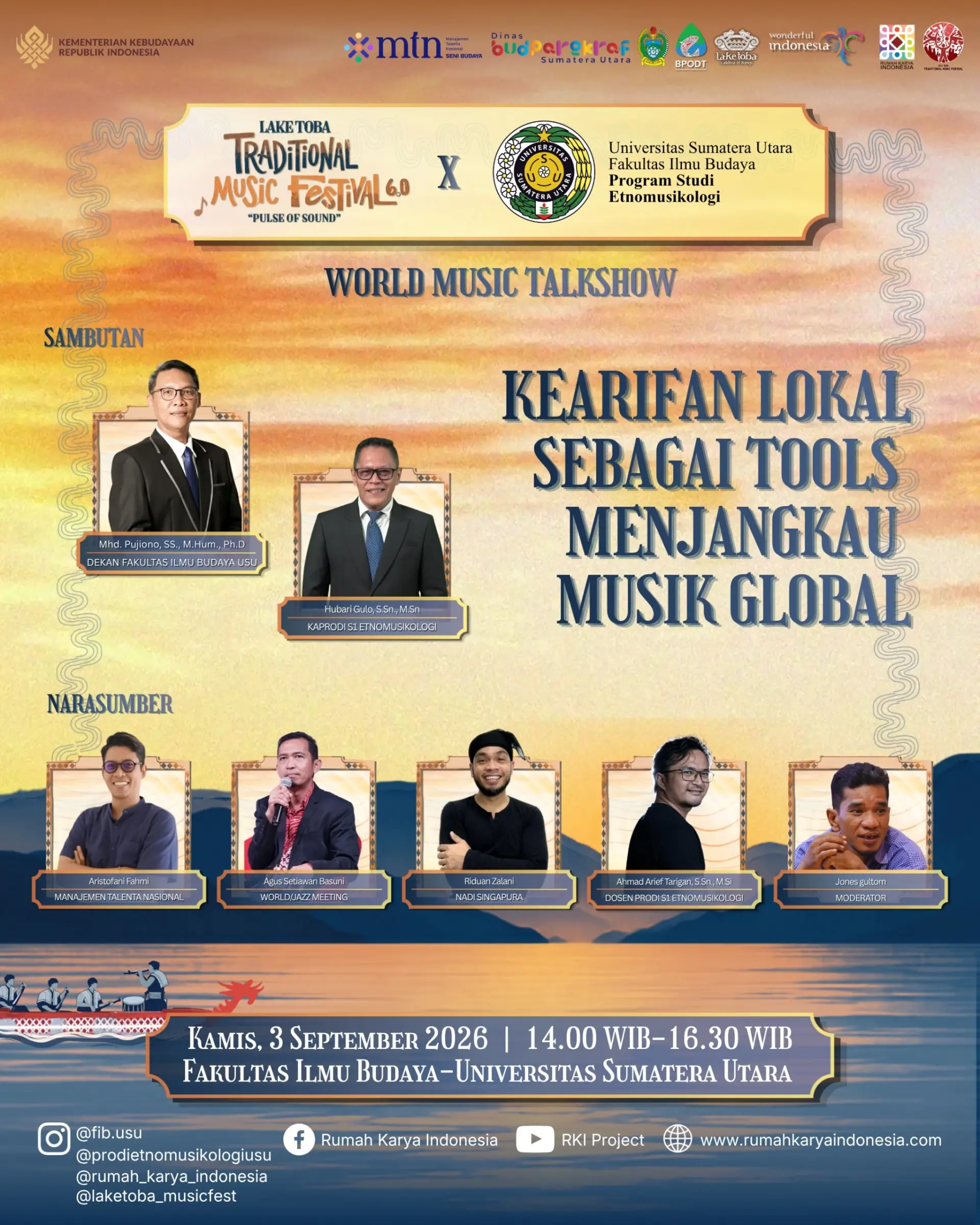
Medan, September 3, 2026 — The Ethnomusicology Study Program, Faculty of Cultural Sciences, Universitas Sumatera Utara (FIB USU), participated in organizing a World Music Talkshow entitled “Local Wisdom as a Tool for Reaching the Global Music Scene.” The event was part of the Lake Toba Traditional Music Festival 6.0, “Pulse of Sound,” and was held on Thursday, September 3, 2026, from 2:00 to 4:30 p.m. WIB at the Faculty of Cultural Sciences, Universitas Sumatera Utara.
The talk show featured several speakers with extensive experience in music development, talent management, international music networks, and academia. The speakers were Aristofani Fahmi from the National Talent Management Agency, Agus Setiawan Basuni from Worldjazz Meeting, Riduan Zalani from NADI Singapore, and Ahmad Arief Tarigan, S.Sn., M.Si., a lecturer in the Ethnomusicology Study Program at FIB USU. The discussion was moderated by Jones Gultom. The event opened with remarks from the Dean of the Faculty of Cultural Sciences, Universitas Sumatera Utara, Mhd. Pujiono, S.S., M.Hum., Ph.D., and the Head of the Ethnomusicology Study Program, Hubari Gulo, S.Sn., M.Sn.
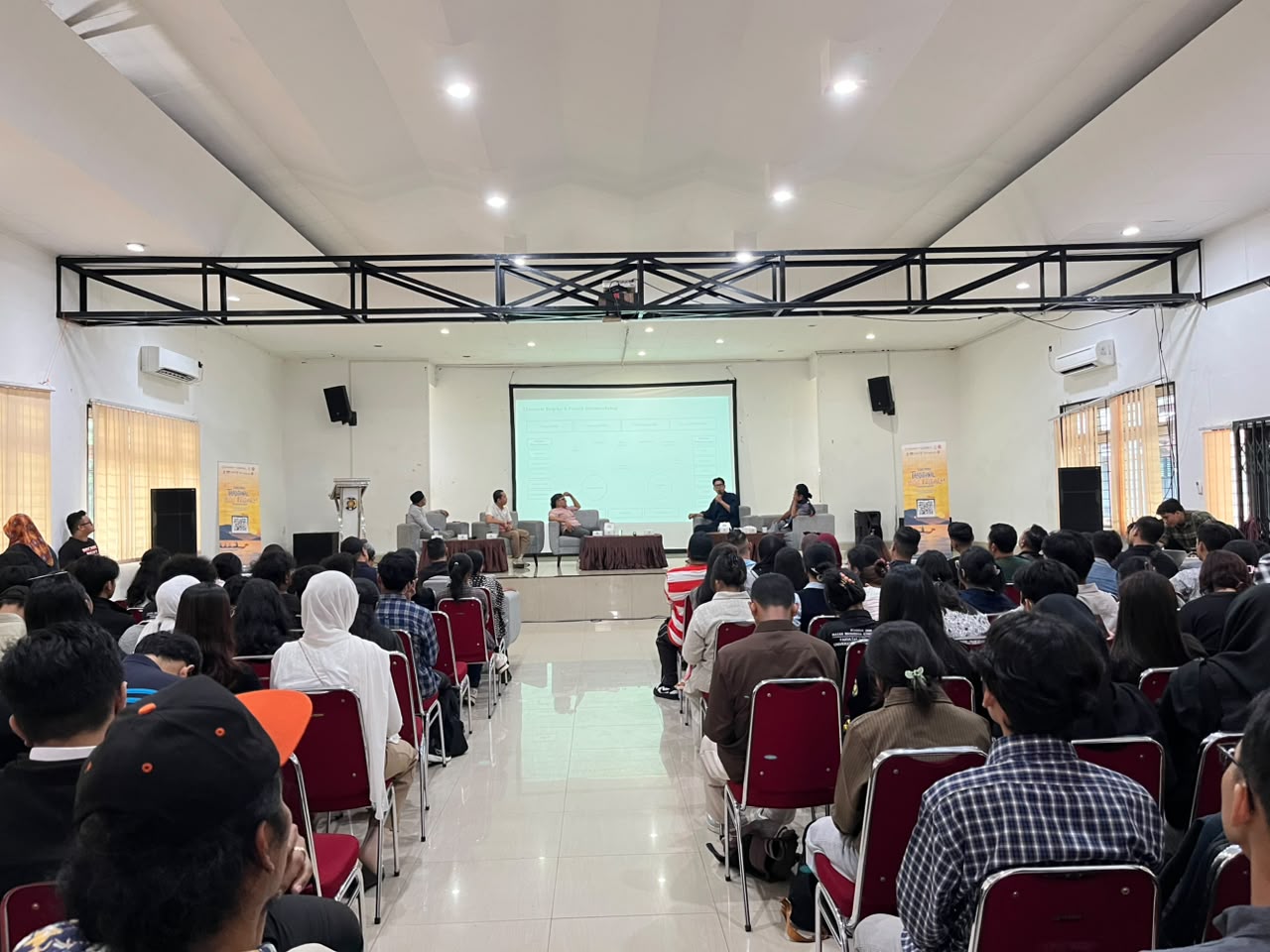
Focusing on the theme of local wisdom as a source of strength for reaching the global music scene, the talk show explored the importance of viewing local music not merely as cultural heritage that needs to be preserved, but also as a source of creativity that can be developed and introduced to a wider audience. Bringing local music to the global stage is important to increase awareness and appreciation of the musical richness and cultural identities of different regions, while also creating opportunities for these traditions to remain alive and be passed on to future generations.
As music continues to evolve in an increasingly interconnected world, globalization can provide opportunities for traditional music to establish networks and reach new audiences. However, engaging with the global music scene does not necessarily mean that local music must lose its identity. One of the key concepts discussed was glocalization, which refers to the process of bringing local elements and characteristics into dialogue with global developments, needs, and tastes. Through this approach, local music can adapt and innovate while maintaining the cultural roots that form its identity.
The discussion also highlighted that the development of local music extends beyond cultural preservation, encompassing education, the creative economy, and partnerships. In the educational context, dialogue among academics, practitioners, and students serves as an important part of the learning process by enriching knowledge and strengthening the competencies of young people. This is in line with Sustainable Development Goal (SDG) 4, which promotes quality education. Meanwhile, when local music is creatively developed and able to reach broader markets, it can contribute to the growth of the creative economy, create employment opportunities, and improve the livelihoods of artists and cultural practitioners, in accordance with SDG 8, which promotes decent work and economic growth.
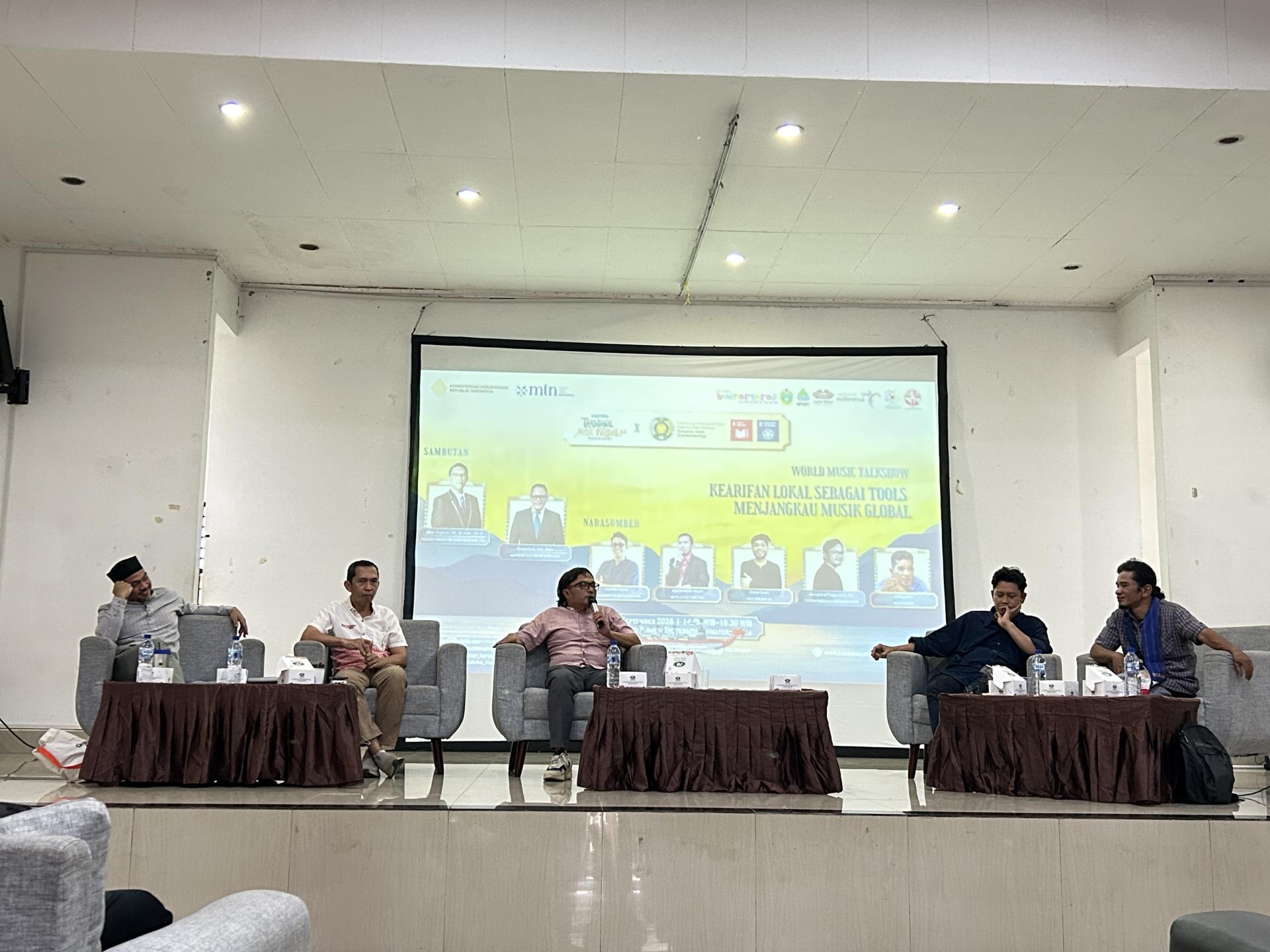
Efforts to bring local music to the global stage also require collaboration among multiple stakeholders. Higher education institutions, government agencies, communities, artists, creative industries, and national and international music networks all have complementary roles in creating an ecosystem that supports the sustainability of traditional music. This spirit of collaboration is in line with SDG 17, which emphasizes partnerships for achieving sustainable development goals, while also strengthening the role of culture as an important component of sustainable development.
Through this World Music Talkshow, the Ethnomusicology Study Program of FIB USU reaffirmed the importance of positioning local wisdom as a powerful means of engaging with the world. Local music should not be viewed merely as a legacy of the past, but as a form of knowledge and cultural identity that can continue to evolve through creativity, innovation, and collaboration. In this way, efforts to bring local music to the global stage are expected not only to broaden appreciation for Indonesia’s rich cultural heritage but also to help ensure that these musical traditions remain alive, relevant, and sustainable for future generations.