The importance of choosing the topic to write about, the reviewers' interest in the author's authentic data and presenting the writing in a coherent and interesting way for the public to know.


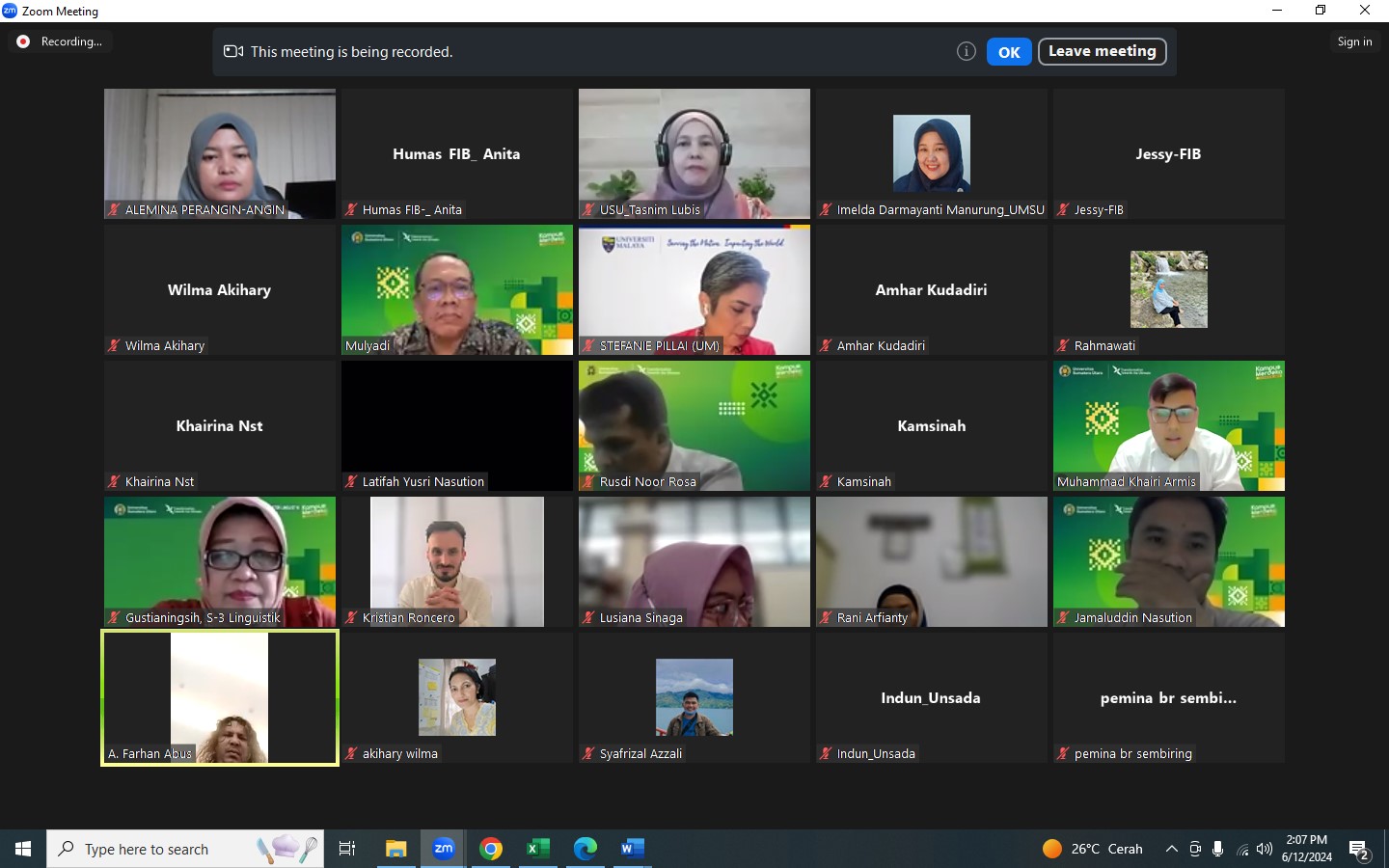
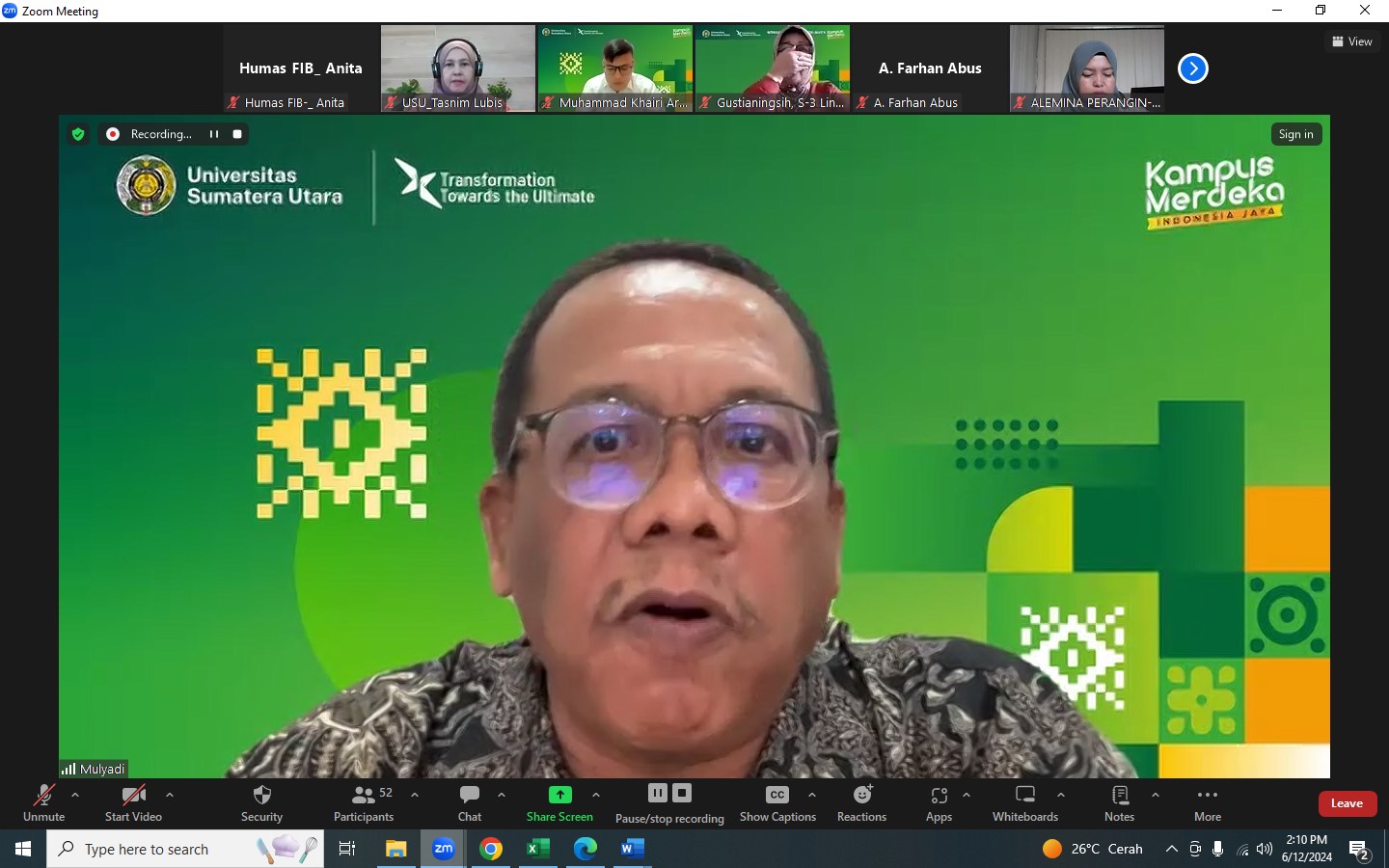
FIB USU PR - Monday 03 June 2024 The Linguistics Doctoral Study Program Faculty of Cultural Sciences (FIB) Universitas Sumatera Utara (USU) has carried out a workshop on Mentoring Student Writing of Reputable Articles with resource person Prof. Dr. Yunisrina Qismullah Yusuf, M. Ling, (Syah Kuala University Banda Aceh) and Dr. Erikson Saragih, M.Hum., (University of North Sumatra) and Pewara Rika Kartika and also attended by Muhammad Pujiono, S.S, M.Hum., Ph.D, Deputy Dean III FIB USU, Prof. Dr. Drs. Mulyadi, M.Hum Head of Linguistics Doctoral Study Program, Lecturers and Students of the Linguistics Masters Study Program FIB USU via Zoom Meeting.
The text of a scientific article is writing containing factual and objective information that readers can use to take action, guide and compare, or even to increase knowledge. Non-scientific article text is writing about views about something that was born as a form of expression and creativity of the writer. Therefore, the purpose of non-scientific texts is to entertain and foster the reader's imagination.
In the example article text, special characteristics will be found. Below are the characteristics of writing article text which are explained into five characteristics, namely:
1. Made concisely, concisely and clearly with the aim of making it easy for readers to understand the contents,
2. Contains facts or opinions presented objectively and equipped with valid supporting data
3. Writing uses formal and informal language, depending on each writer,
4. The method for writing articles is systematic
5. Be factual and informative. Disclose information based on research results whose truth can be accounted for.
Get to know the structure of procedural text and how to write it or also known as steps for writing article text: This needs to be done before writing article text:
1. Choose a topic or idea.
2. Know and understand the reader.
3. Study the technical aspects of publishing.
4. Start writing with an outline.
5. Write articles with weighty paragraphs.
6. Present the main idea explicitly.
7. Provide new and interesting illustrations.
8. Use lively language.
9. Close the article with a strong paragraph
10. Edit your writing carefully.
One of the main points of this workshop is the importance of choosing the topic to write about, the reviewers' interest in the author's authentic data and presenting the writing in a coherent and interesting way for the public to know.